Continuum on South Beach: How to Evaluate Grill Rules Before Contract
Quick Summary
- Grill rights can affect terrace dining, entertaining and resale confidence
- Review declarations, bylaws, house rules and terrace policies early
- Confirm whether fuel type, location or unit type changes permission
- Put grill expectations in writing before the contract becomes firm
Why Grill Rules Deserve Pre-Contract Attention
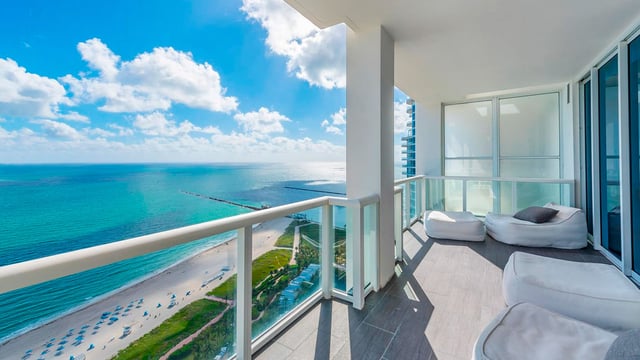
At the very top of South Beach, lifestyle is often defined by details: the hour of light on a terrace, the privacy of an outdoor dinner, the ease of moving from pool to residence, and the freedom to host without friction. For buyers evaluating Continuum on South Beach, grill rules belong squarely in that lifestyle conversation. They can determine whether a purchaser may cook on a private terrace, use a shared outdoor cooking area, or move entertaining plans away from the residence entirely.
The mistake is assuming that “outdoor living” automatically includes private grilling. In ultra-luxury oceanfront condominium life, the difference between a permitted electric grill, a prohibited propane appliance, and a board-approved built-in outdoor kitchen can meaningfully reshape daily ownership. It may also influence how a residence is perceived by future buyers who view terrace dining as part of the value proposition.
This is especially relevant for South of Fifth buyers, where oceanfront privacy, terrace depth and resale confidence often converge. Within the broader Miami Beach luxury market, grill permission should be treated as a defined due-diligence item, not a casual amenity assumption.
Start With the Governing Documents, Not the Brochure
Before a contract becomes non-cancelable, a buyer should request and review the condominium declaration, bylaws, house rules, rules-and-regulations package, and any terrace or balcony-use policies. These are the documents that matter when lifestyle expectations meet enforceable limitations.
Marketing language can help convey atmosphere, but it is not the final authority on appliance use, open-flame restrictions, fuel storage, balcony conduct, or association approval. If grilling is central to the purchase decision, the question should be asked in writing and answered in writing before deadlines pass.
Buyers comparing the South Beach experience with nearby luxury buildings such as Apogee South Beach or The Ritz-Carlton Residences® South Beach should not assume that policies transfer from one building to another. Each condominium has its own documents, approval culture, insurance posture, and enforcement history. The correct answer is always building-specific and, ideally, unit-specific.
Identify the Exact Outdoor Area You Intend to Use
Grill restrictions may differ depending on whether the cooking area is a private balcony, a larger terrace, a penthouse deck, a cabana area, or a common amenity space. A buyer should define the intended use precisely: where the grill would sit, what type of appliance would be used, how often it would be used, and whether any existing outdoor kitchen equipment is included in the sale.
That distinction matters because a terrace attached to a residence may be treated differently from a balcony, and both may be treated differently from a common-area amenity. A penthouse deck may raise additional questions about built-in equipment, exhaust, wind exposure, fire safety, and association approval. A cabana or pool-area cooking station may be governed by separate reservation, guest, or event policies.
If the residence already includes grill equipment, do not treat its presence as proof of permission. The equipment may have been approved, grandfathered, removable, or subject to future enforcement. The purchase file should clarify whether the equipment is legally permitted, whether approval was documented, whether the approval transfers to a new owner, and whether the association has reserved the right to require removal.
Ask About Fuel Type, Appliance Type and Approval Status
A careful review should confirm whether charcoal, gas, propane, electric, built-in, portable, or infrared grills are treated differently. The policy may distinguish between open flame and electric heat, between permanent installations and portable appliances, or between equipment that requires stored fuel and equipment that does not.
The buyer should ask whether private grills are prohibited entirely, allowed only in certain unit types, or allowed only with prior written association approval. If approval is possible, the next questions are procedural: who reviews the request, what drawings or specifications are required, whether licensed contractors must be used, and whether approval can be revoked.
These are not merely technical questions. They affect how a residence lives. A buyer who hosts frequent dinners may value a terrace differently if cooking must occur indoors, in a shared amenity area, or outside the building. By contrast, a buyer who rarely cooks outdoors may care more about clarity for resale, insurance compliance and avoiding future violations.
Convert Verbal Comfort Into Written Confirmation
The most useful pre-contract step is to ask management or the association for written confirmation of the current grill policy for the exact unit, line and outdoor area under consideration. The request should be specific enough to avoid ambiguity: not “Are grills allowed?” but “Is this owner permitted to use this type of grill in this exact location, and under what conditions?”
Listing agents and sellers can help gather information, but a prudent buyer should not rely solely on informal assurances. A beautiful terrace photograph, an existing appliance, or a verbal statement at a showing is not the same as a governing document, association approval letter, estoppel reference, or management confirmation.
For buyers also considering waterfront or resort-oriented Miami Beach addresses such as Shore Club Private Collections Miami Beach, this same discipline applies. Outdoor lifestyle is central to the appeal, but the rules behind that lifestyle must be verified before they are priced into the offer.
Build Grill Expectations Into the Contract Strategy
Contract protections may include a document-review contingency, association-estoppel review, seller representation about grill compliance, and a right to cancel if the buyer’s intended use is not permitted. The point is not to overcomplicate the purchase. It is to align the contract with the lifestyle being purchased.
A buyer’s attorney can help frame the issue cleanly. If a terrace grill is material to the decision, the contract can request relevant documents early, require the seller to disclose known violations or approvals, and preserve a review period long enough to evaluate rules before the buyer is locked in.
Buyers should also confirm whether restrictions are board-level association policies that can change, limitations embedded in governing documents, or requirements driven by fire-code or insurance considerations. This hierarchy matters. A board policy may be easier to amend than a recorded restriction, while fire-safety or insurance-driven limitations may leave little discretion.
What a Sophisticated Buyer Should Ask
The strongest questions are direct. Is private grilling allowed in this unit’s outdoor area? Which fuel types are prohibited or permitted? Is written approval required before any appliance is installed or used? Does approval transfer with title? Are existing outdoor kitchen components approved, grandfathered, or removable? Have there been recent enforcement actions or policy updates? Could the board alter the policy after closing?
A buyer should also ask whether shared outdoor cooking areas exist, whether they require reservations, and whether guest or event rules apply. If private grilling is not allowed, a shared amenity may still support entertaining, but it may not deliver the same spontaneity or privacy.
The safest approach is to decide how important grilling truly is, then match the due diligence to that importance. If the vision is frequent terrace dining with family, chefs or guests, grill permission belongs near the top of the review list. If it is a secondary preference, the review still matters because future buyers may ask the same questions.
FAQs
-
Should a Continuum on South Beach buyer verify grill rules before signing? Yes. Grill permission can affect private terrace use, shared amenity use, entertaining plans and resale confidence.
-
Can I rely on marketing language about outdoor living? No. Marketing language is not a substitute for the declaration, bylaws, house rules and terrace-use policies.
-
Do grill rules differ by outdoor space? They may. A balcony, terrace, penthouse deck, cabana area and common amenity space can be treated differently.
-
Which grill types should be reviewed? Buyers should ask about charcoal, gas, propane, electric, built-in, portable and infrared grills.
-
What if the terrace already has grill equipment? Verify whether it is approved, grandfathered, removable, transferable or subject to future enforcement.
-
Who should confirm the current rule? Ask management or the association for written confirmation specific to the unit, line and outdoor area.
-
Can the seller’s statement be enough? It helps, but written association confirmation and document review are stronger protections.
-
Can grill rules change after closing? They can, depending on whether the rule is a board policy, governing-document restriction, or safety requirement.
-
What contract protections may help? A document-review contingency, estoppel review, seller representation and cancellation right may be useful.
-
Is grill permission an amenity or a due-diligence item? Treat it as due diligence, especially if terrace dining and outdoor entertaining are central to ownership.
If you'd like a private walkthrough and a curated shortlist, connect with MILLION.

Million Luxury
Million Luxury
Welcome to MILLION, an exclusive luxury real estate boutique nestled in the heart of South Florida’s most desirable locations. Specializing in high-end properties, we provide a sanctuary for discerning clients including top Fortune 500 executives, affluent families, celebrities, and professional athletes from across the globe. At MILLION, we understand the unique demands of our elite clientele and offer a seamless blend of confidentiality and personalized attention. Our commitment to privacy is unwavering; we ensure that every transaction and interaction is handled with the utmost discretion and according to stringent confidentiality protocols. Our concierge service embodies the pinnacle of white-glove care, offering tailored assistance that transcends traditional real estate support.