Evaluating the Waitlist Dynamics for Superyacht Dockage in Fort Lauderdale
Quick Summary
- Waitlists are rarely “one line”; priority often depends on vessel and usage fit
- The right slip is defined by depth, beam, power, and turning, not length alone
- Buyers can underwrite access by pairing residences with marina-adjacent lifestyles
- A dockage plan should include backup berths, contracts, and seasonality timing
Why Fort Lauderdale waitlists feel different at the superyacht tier
Fort Lauderdale is built around water, but superyacht dockage is not a commodity. At this level, the market behaves more like private club inventory: limited, operationally constrained, and highly sensitive to fit. In practice, a waitlist functions as a screening mechanism-matching a berth to a vessel’s real demands and an operator’s risk profile.
At the top end, the “available slip” many owners picture is rarely the slip they can actually use. A berth that cannot accommodate true beam, draft, shore-power requirements, or safe turning geometry is not an alternative-it is a non-starter. Add the preference for quick ocean access and discreet arrival routes, and the universe of functionally acceptable options narrows even further.
For luxury buyers relocating to Broward with a yacht already in the program, the waitlist is a timeline variable, not an administrative detail. It should be underwritten alongside aviation access, staffing, and the home’s security plan.
How waitlists are actually structured: priority, fit, and the unspoken criteria
Most waitlists at this level are not run as a strict first-come queue. More commonly, they operate as a priority stack, with each opening matched to the “best” vessel for that specific slot. That can mean:
-
Vessel profile compatibility. Draft, beam, and weight matter because they shape safe maneuvering and fixed infrastructure limits.
-
Operational predictability. A yacht that moves in and out reliably, maintains professional standards, and minimizes disruptions can be easier to place.
-
Service intensity. Some marinas favor vessels with defined crew protocols, clear insurance, and disciplined maintenance practices.
-
Seasonality pattern. Operators often plan around winter traffic and peak-event pressure, which can compress availability even when annual occupancy appears manageable.
A more useful way to think about “wait time” is to split it into two questions. First: how long until any berth opens? Second: how long until the right berth opens-in the right location, with the right utilities and operational tolerance? The second question is the one that governs day-to-day quality of life.
The physical constraints that drive scarcity: it’s not just linear feet
At superyacht scale, a marina is an engineered system with choke points. One limiting factor can make a slip effectively unusable for a specific yacht.
Key constraints include:
-
Depth and tidal variability. Draft tolerance becomes both a safety issue and a scheduling issue.
-
Turning basins and fairway width. A berth can be technically long enough yet practically unreachable without uncomfortable maneuvers.
-
Beam and fendering geometry. Many “length” listings understate beam realities.
-
Power and shore-side infrastructure. True superyacht utilities, load management, and redundancy are part of the decision.
-
Access and staging. Crew movement, provisioning, and discreet guest transfer matter more than most marketing implies.
This is why two yachts with the same length can face completely different dockage outcomes. It also explains why waitlists persist even when new inventory comes online: added slips do not automatically translate into added superyacht-capable slips.
The lifestyle overlay: why buyers pair dockage planning with residence planning
Fort Lauderdale buyers often assume the residence decision is separate from the dockage decision. In practice, they’re linked-through commute time, security posture, and how you want a “yacht day” to feel.
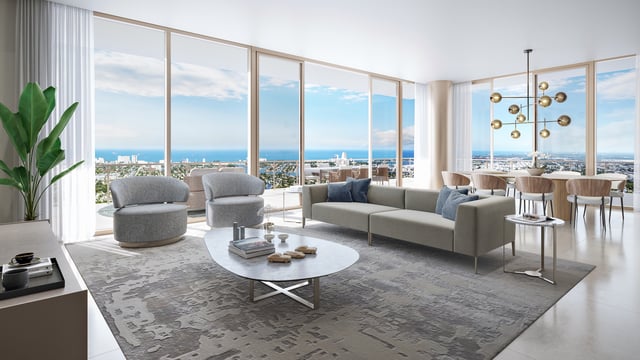
If you are prioritizing a lock-and-leave residence that supports a global calendar, consider buildings and neighborhoods that reduce friction on departure days. A refined example of the new Fort Lauderdale residential mood is Andare Residences Fort Lauderdale, where a turnkey lifestyle can complement a dockage plan built around professional crew handling and predictable logistics.
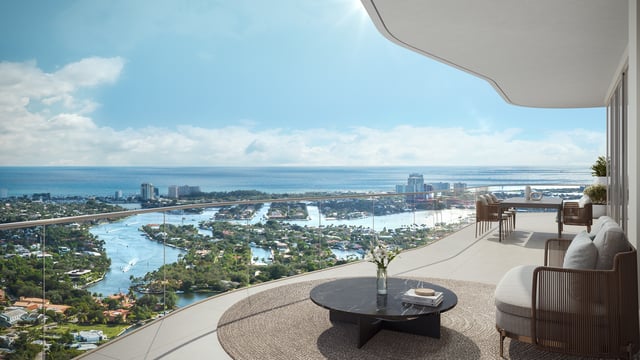
For buyers who want a resort-forward experience, Auberge Beach Residences & Spa Fort Lauderdale and Four Seasons Hotel & Private Residences Fort Lauderdale reflect the same principle: the more seamless the onshore experience, the less you need to compensate for dockage complexity with constant personal oversight.
This is not merely aesthetic. When dockage is on a waitlist, you may spend months in a temporary berthing arrangement. A residence that supports privacy, service, and recovery between trips becomes part of your risk management.
Timing and seasonality: the invisible hand on waitlist speed
Even without quoting specific event calendars, Fort Lauderdale’s rhythm is clear: winter brings higher traffic, more visiting vessels, and tighter operational capacity. That seasonality can influence both the pace of turnover and an operator’s willingness to reshuffle berth assignments.
For the buyer, seasonality shapes strategy in two ways:
-
Application timing. Submitting requests and completing compliance items ahead of the busiest months can reduce friction.
-
Interim solutions. A short-term berth may be feasible in the off-season, but harder to secure during peak periods.
If your cruising schedule is fixed, build your dockage plan backward from your “must-sail” date. The goal is to avoid being forced into a compromise berth that changes how the yacht is used.
The real cost of waiting: what it does to ownership, crew, and your calendar
The waitlist is not merely inconvenient. It can reshape both the economics and the lived experience of ownership.
-
Calendar compression. If you cannot get in and out reliably, the yacht becomes an occasional event rather than a spontaneous instrument.
-
Crew efficiency. Long commutes, inconsistent access, and staging limitations create friction-and can raise turnover risk.
-
Maintenance and readiness. Reliable shore power and service access influence how “ready” the yacht is on short notice.
-
Privacy exposure. Interim solutions can mean higher-visibility movements and less controlled arrival experiences.
In luxury real estate terms, this is the same logic as buying elevator privacy, deeded parking, or a protected view corridor: you are paying to protect time and discretion.
Practical strategies that improve your odds without compromising discretion
The most effective approach is to treat dockage like a portfolio: a primary objective supported by structured backups.
1) Define requirements in engineering terms, not marketing terms.
Document draft, beam, power needs, and maneuvering constraints. A “fits on paper” berth can be operationally wrong.
2) Prepare a clean compliance package.
Insurance, ownership structure, captain’s contact, and operational protocols should be immediately available. When a berth opens, a delayed file can lose momentum.
3) Separate home selection from berth optimism.
Do not buy a residence assuming a specific berth will materialize on your timeline. Choose a home that works even with interim docking.
4) Build a discreet interim plan.
That may include seasonal repositioning, temporary berthing, or a split strategy between Broward and another South Florida node.
For some owners, that split strategy is as much about lifestyle as it is about logistics. A pied-a-terre in Miami can serve as an elegant counterbalance while Broward dockage remains in motion. Consider the service-centric living environment of 2200 Brickell as an example of how a second base can keep your schedule fluid while your Fort Lauderdale berth is being finalized.
When “marina access” is a real estate feature, and when it is a sales phrase
Luxury buyers are accustomed to amenity language. With dockage, precision is the difference between a real feature and a convenient phrase.
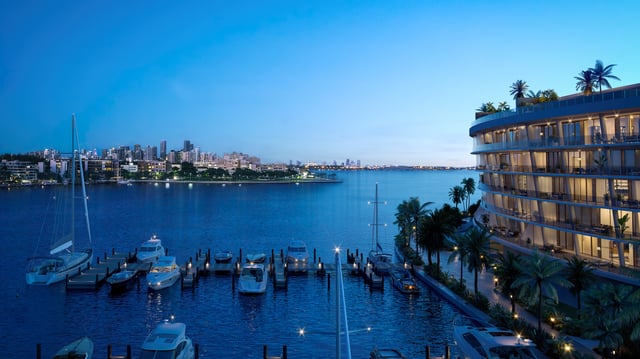
A meaningful marina-adjacent value proposition typically includes a clear line of sight between what is promised and what is operationally feasible: guest transfer, crew logistics, staging, and a realistic pathway to a berth that matches your vessel.
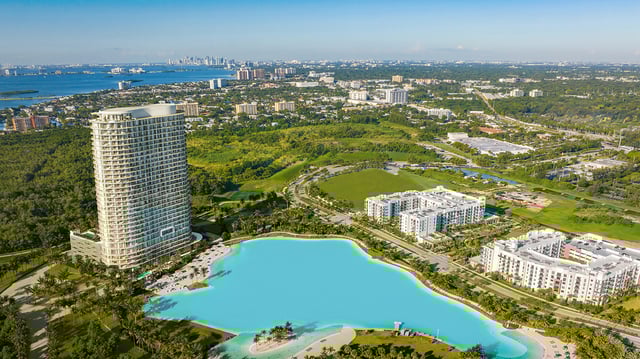
If you want beachfront lifestyle while maintaining multi-market flexibility, 57 Ocean Miami Beach illustrates the broader South Florida theme: many high-end residences optimize the onshore experience, while owners build a separate, professionalized system for marine access. The sophistication is in the integration-not in expecting one asset to do everything.
A buyer’s underwriting checklist for dockage waitlist risk
Before you consider dockage “solved,” pressure-test these items:
-
Can the berth support your yacht’s true operating profile, including utilities and turning?
-
Is the timeline aligned to your next major cruising objective?
-
Do you have a contract structure that protects you if specifications change?
-
Do you have a discreet interim plan that preserves privacy and reduces crew strain?
-
Does your residence support the lifestyle you want even during dockage transitions?
When these answers are specific, the waitlist becomes manageable. When they remain vague, it becomes the kind of uncertainty that undermines both enjoyment and the resale narrative.
FAQs
-
Why do superyacht dockage waitlists persist in Fort Lauderdale? Because true superyacht-capable berths are limited by depth, utilities, and maneuvering constraints.
-
Is a waitlist usually first-come, first-served? Often, it functions more like a matching process where the right vessel is paired to the right berth.
-
What matters more than length overall (LOA) when evaluating a berth? Beam, draft, turning geometry, and shore-power requirements can be the real deal-breakers.
-
Can I assume a “temporary slip” will be easy to find while I wait? Not necessarily; interim options can tighten quickly during peak seasonal demand.
-
Does having professional crew help with waitlist outcomes? It can, because operators tend to prefer predictable operations and clear communication.
-
Should I buy a Fort Lauderdale residence before securing dockage? Yes-if the home works on its own merits; do not underwrite the purchase on berth optimism alone.
-
How early should I start the dockage process? As early as practical, ideally before a fixed cruising date forces you into compromises.
-
What is the biggest hidden cost of being on a waitlist? Loss of spontaneity, added crew friction, and reduced readiness can change how you use the yacht.
-
Can a second South Florida base help while dockage is pending? Yes; a well-located pied-a-terre can keep your calendar flexible during transitions.
-
What should I ask to confirm a berth is truly viable? Ask for operational specifics on depth, turning, utilities, and how your vessel profile will be evaluated.
For a confidential assessment and a building-by-building shortlist, connect with MILLION Luxury.

Million Luxury
Million Luxury
Welcome to MILLION, an exclusive luxury real estate boutique nestled in the heart of South Florida’s most desirable locations. Specializing in high-end properties, we provide a sanctuary for discerning clients including top Fortune 500 executives, affluent families, celebrities, and professional athletes from across the globe. At MILLION, we understand the unique demands of our elite clientele and offer a seamless blend of confidentiality and personalized attention. Our commitment to privacy is unwavering; we ensure that every transaction and interaction is handled with the utmost discretion and according to stringent confidentiality protocols. Our concierge service embodies the pinnacle of white-glove care, offering tailored assistance that transcends traditional real estate support.