Villa Miami vs Miami Tropic Residences: Culinary-Led Luxury by Major Food Group vs Jean-Georges
Quick Summary
- Two culinary signatures, two lifestyles: social dining energy vs quiet mastery
- Compare service culture, hosting flow, and day-to-night routines in each tower
- What to ask: access, reservations, privacy, and the kitchen’s role at home
- How culinary-led residences fit Edgewater and broader Miami luxury demand
Culinary-led living is the new status language in Miami
In South Florida’s uppermost tier, the most meaningful amenity is often not a feature, but a feeling: being known, being anticipated, being handled. Culinary-led luxury has become a shorthand for that sensation because dining is where service is easiest to read. A well-run restaurant runs on timing, choreography, and discretion. When a residential project adopts that DNA, daily life can feel curated without feeling controlled.
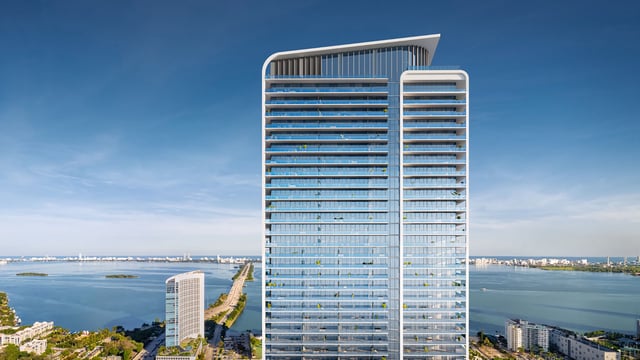
This is the underlying comparison between Villa Miami and Miami Tropic Residences. Both signal a future in which the “best table” is not a destination across town, but an extension of home. Yet the lived experience can diverge dramatically depending on who defines hospitality.
Think of it as two interpretations of the same premise. One is culinary-led by a group known for creating scenes and sustaining them-places where the dining room operates as a social instrument as much as a restaurant. The other is culinary-led by a chef whose signature leans toward refinement, restraint, and the kind of precision that makes luxury feel effortless.
For buyers, the question is not which name is more recognizable. The question is which service culture matches your life.
Villa Miami: Major Food Group’s social cadence, translated into residence
Major Food Group’s influence, when translated into a residential setting, tends to favor momentum: arrivals, handoffs, and the quiet assurance that a space is ready for you-and ready for your guests. In a building like Villa Miami, the culinary layer is positioned to operate as part of the property’s social ecosystem, rather than as a single, siloed restaurant experience.
Buyer mindset: If you entertain frequently, want your building to read like a private club without the friction of membership, and prefer hospitality that feels proactive, this is the direction.
Practical implications to explore during your due diligence:
- Hosting flow:
Does the building support a true “from elevator to aperitivo” rhythm, where guests move cleanly from arrival to lounge to dining?
- Resident priority without visibility:
In the strongest culinary-led buildings, access feels dependable while discretion stays intact. The goal is effortless entry, not public preference.
- Service depth beyond food:
The most capable hospitality operators understand that dining is a gateway to broader service patterns-from event pacing to last-minute problem solving.
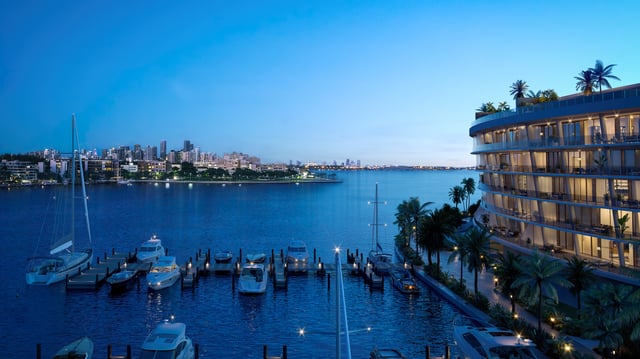
Edgewater adds another dimension. The neighborhood has evolved into a refined alternative for buyers who want proximity to Miami’s core, but prefer a more residential waterfront sensibility. That context complements a culinary concept built on repeat visits and a community of regulars.
Miami Tropic Residences: Jean-Georges and the case for quiet excellence
Jean-Georges, as a culinary signature, often signals something different: taste as a form of minimalism. Rather than “scene,” the luxury lives in confident detail-where the best moments can be intimate, and the most memorable meals are the ones that don’t announce themselves.
In a residential setting, that can translate into a calmer day-to-day. The culinary layer can feel less like an event and more like a baseline standard. For certain buyers, that is the highest expression of prestige.
Buyer mindset: If you prioritize privacy, prefer a more understated social life, or travel frequently and want a consistent level of quality when you are in town, this approach can feel precisely aligned.
Practical implications to explore:
- Consistency over spectacle:
Ask what “resident dining” looks like on an ordinary weeknight-not just during opening-week energy.
- In-residence integration:
Culinary-led living is not only about a restaurant downstairs. It is whether the building’s service culture supports your home as the primary venue.
- A refined relationship to wellness:
Buyers who gravitate toward quiet luxury often care how food, fitness, and recovery coexist-not as separate amenities, but as a single lifestyle.
The real comparison: how each concept changes the way you live
A name can set expectations, but the lived experience is shaped by operational decisions: staffing, access policies, delivery logistics, and how the building performs at peak hours.
Here is how to evaluate Villa Miami vs Miami Tropic Residences in a buyer-oriented way.
1) Access and priority
Culinary-led luxury only works when residents feel protected from the popularity the concept can generate. Ask how reservations are handled for residents, how walk-ins are managed, and what privacy protocols exist for high-profile arrivals.
2) The building’s social temperature
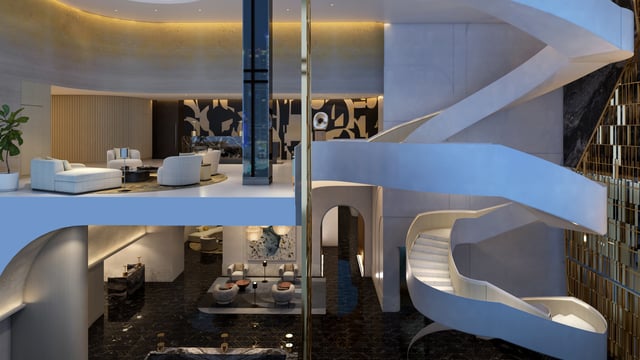
Some buildings are designed to create magnetic common spaces, where energy is part of the value. Others are calibrated for calm, where you can move from car to residence with minimal interaction. Decide which version supports your daily rhythm.
3) Entertaining at scale vs intimate hosting
If you host groups, you will care about pre-function spaces, private dining options, and whether staff can deliver a seamless multi-hour evening. If you host selectively, you will care more about nuanced service, pacing, and the ability to make the experience feel personal rather than standardized.
4) Kitchen culture, not just kitchen design
Luxury kitchens can be beautiful and still underperform as lifestyle tools if the building does not support them. Ask about grocery receiving, cold storage options, elevator service policies for catering, and how deliveries are handled after hours.
Where this fits in the larger Miami luxury landscape
Culinary-led positioning is not happening in isolation. It sits alongside fashion-branded towers, wellness-centered residences, and the rising expectation that a home comes with a complete service environment.
In Brickell, for example, the luxury conversation often centers on walkability, business adjacency, and a vertical lifestyle where dining is part of the daily loop. That is why projects such as 888 Brickell by Dolce & Gabbana resonate with buyers who want a high-design, high-service address that feels globally current.
Along the sand, priorities shift toward privacy, oceanfront calm, and a more resortlike cadence. The appeal of 57 Ocean Miami Beach, for instance, is less about scene and more about the serenity of a finished, coastal daily routine.
And for buyers who prioritize long-term livability, Coconut Grove continues to attract those who want established neighborhood texture with a more residential pace. A project like Four Seasons Residences Coconut Grove speaks to that preference-service is present, but the mood is never performative.
In that context, Villa Miami and Miami Tropic Residences offer two sophisticated answers to the same market truth: buyers are no longer choosing only a unit. They are choosing a way of being taken care of.
Due diligence questions sophisticated buyers should ask
Culinary-led residences reward precision. Before committing, consider a short list of questions that quickly reveals the operational reality.
-
What is the resident access policy to dining and events? You want clarity on priority, not informal promises.
-
How will privacy be protected? Separate entrances, discreet seating, and controlled visibility matter.
-
What is the service scope in-residence? Look for specifics around delivery, catering, and staffing.
-
How will peak demand be handled? A popular dining concept can strain elevators, valet, and security if it is not planned correctly.
-
What is the long-term operational plan? Culinary concepts should be durable, not dependent on opening-year excitement.
The goal is alignment. The right building makes your life easier in ways you notice every day-and in ways your guests never have to think about.
Choosing by lifestyle: who each concept likely suits
No two buyers define luxury the same way, but patterns emerge.
Villa Miami tends to fit:
-
Buyers who entertain often and want a built-in social venue.
-
Owners who value a lively, curated environment with strong service.
-
Those who want their building’s hospitality to feel energetic and anticipatory.
Miami Tropic Residences tends to fit:
-
Buyers who want culinary credibility without constant visibility.
-
Owners who prefer quiet excellence and a more private daily cadence.
-
Those who want dining to feel like an extension of home, not a destination.
If you are choosing between them, do not over-focus on name recognition. Focus on what happens at 7:30 p.m. on a Tuesday-and at 10:30 p.m. when you want the evening to end cleanly, quietly, and on your terms.
FAQs
-
What does “culinary-led luxury” mean in a residential building? It means dining and hospitality are central to the lifestyle offering, shaping service, social spaces, and in-residence support.
-
Is the restaurant the most important part of a culinary-led residence? Not necessarily. The most valuable component is often the service culture and access rules that make daily life feel effortless.
-
How should I compare Major Food Group and Jean-Georges in a real estate context? Compare the lifestyles they imply: social momentum and scene-making versus quiet refinement and consistency.
-
Will a popular culinary concept reduce privacy for residents? It can-unless the building has clear resident priority, discreet circulation, and strong security protocols.
-
What questions should I ask about resident dining access? Ask how reservations work, what priority residents receive, and how private dining or off-menu requests are handled.
-
Does culinary-led branding affect resale value? It can support desirability if operations remain strong, but durability depends on long-term management and execution.
-
Should frequent entertainers prioritize one concept over the other? Yes. Entertainers should prioritize hosting flow, private dining options, and staff capabilities over marketing language.
-
How important is in-residence service for culinary-led living? Very important. Delivery logistics, catering support, and discretion in the home often matter more than the lobby restaurant.
-
Do these concepts replace the need for a personal chef? They can reduce the need for one, but buyers who want full customization may still prefer private staffing.
-
What’s the simplest way to decide between Villa Miami and Miami Tropic Residences? Choose the service “temperature” you prefer: energized and social, or calm and understated.
For a confidential assessment and a building-by-building shortlist, connect with MILLION Luxury.

Million Luxury
Million Luxury
Welcome to MILLION, an exclusive luxury real estate boutique nestled in the heart of South Florida’s most desirable locations. Specializing in high-end properties, we provide a sanctuary for discerning clients including top Fortune 500 executives, affluent families, celebrities, and professional athletes from across the globe. At MILLION, we understand the unique demands of our elite clientele and offer a seamless blend of confidentiality and personalized attention. Our commitment to privacy is unwavering; we ensure that every transaction and interaction is handled with the utmost discretion and according to stringent confidentiality protocols. Our concierge service embodies the pinnacle of white-glove care, offering tailored assistance that transcends traditional real estate support.